
Caring for Your Trees in Autumn: Checking Stakes, Recovering After Storms & Heavy Rain
Autumn brings a change of pace in the garden. Growth slows, deciduous trees begin to lose their leaves, and wind and rain become more frequent visitors. A few simple checks now will help your pleached trees through the colder months, from securing their supports to keeping an eye on soil moisture after heavy rain.
Check stakes and tree ties
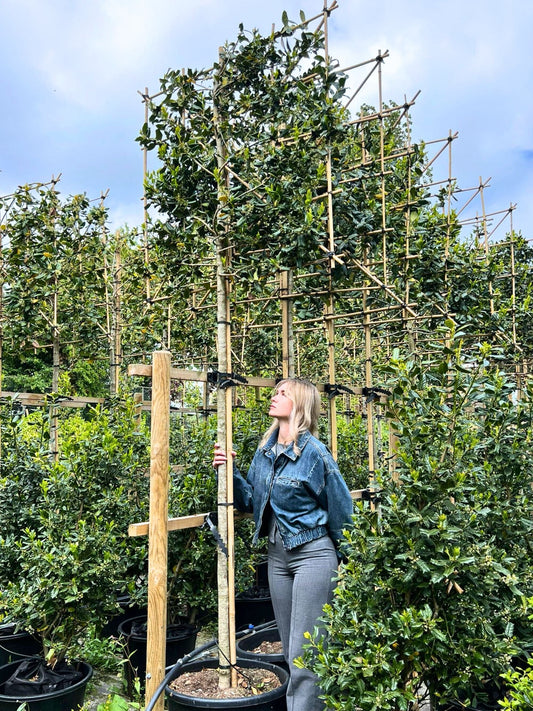
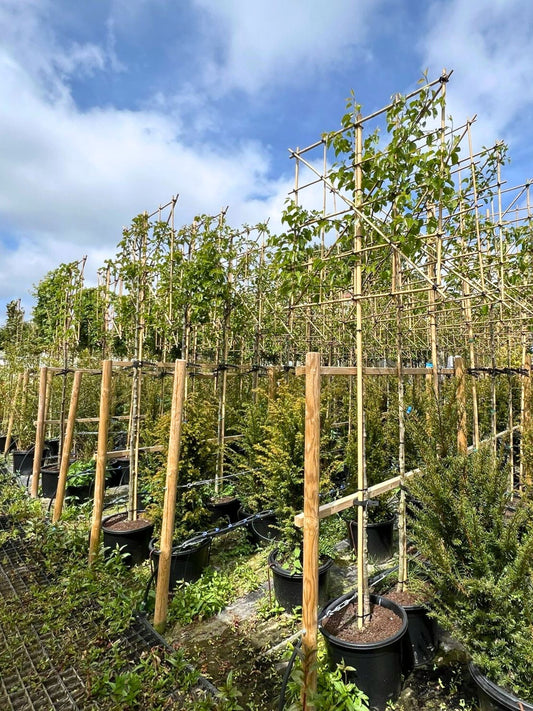
Check that stakes are firm and tree ties are secure before autumn winds arrive. Adjust any ties that are rubbing or digging into the bark, and replace those that have become worn or damaged. The supports should keep the roots stable while allowing the trunk a little movement.
Check again after strong winds. If the soil has loosened slightly around the base, gently firm it back down once it is no longer saturated. If a tree has developed a significant lean or its rootball has lifted, contact a garden professional before trying to reposition it.
Check training ties and repair the frame
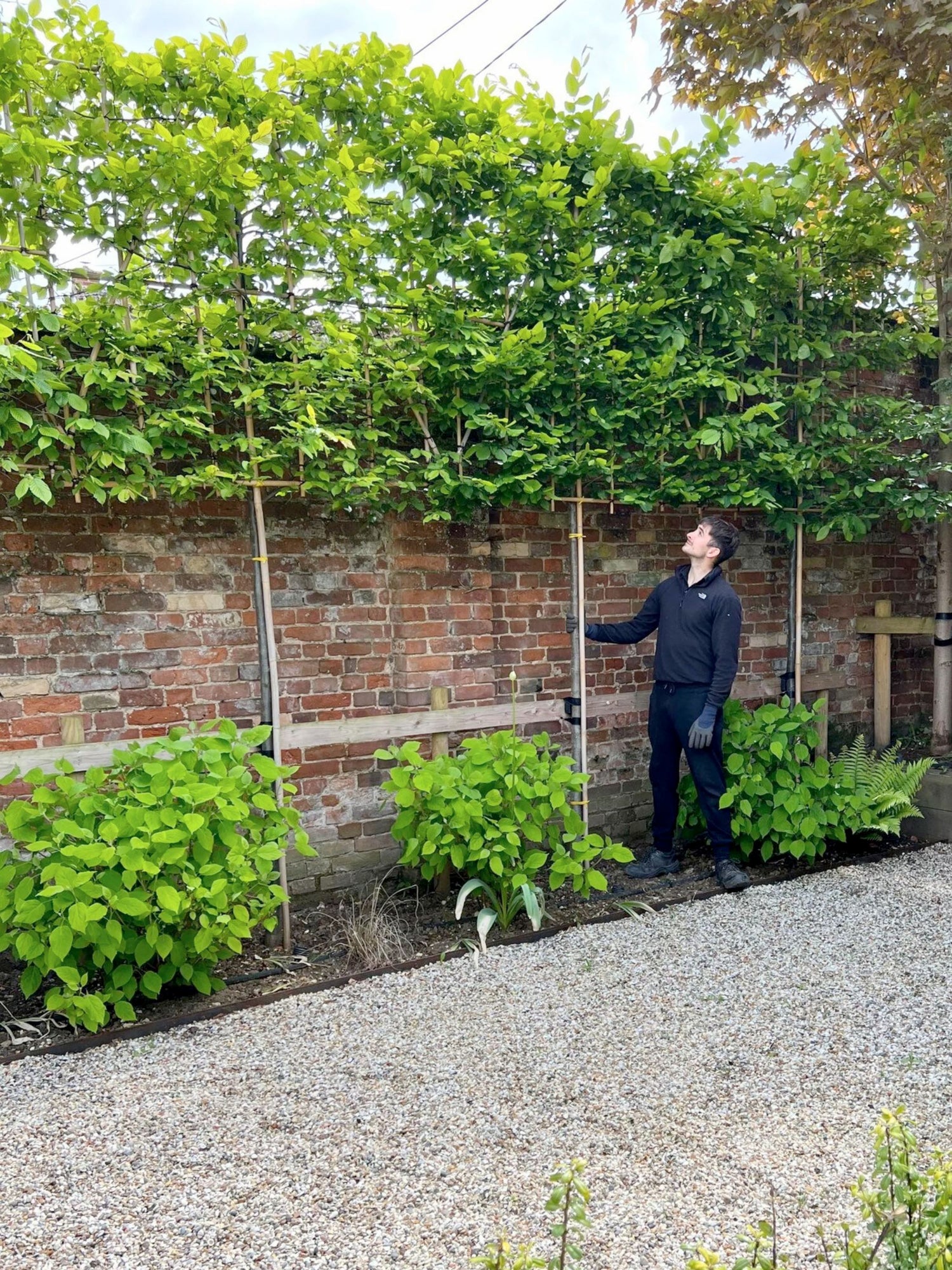
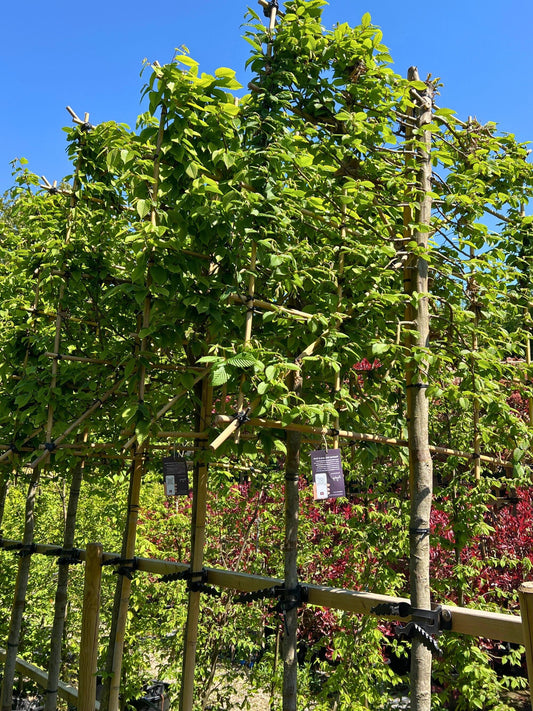
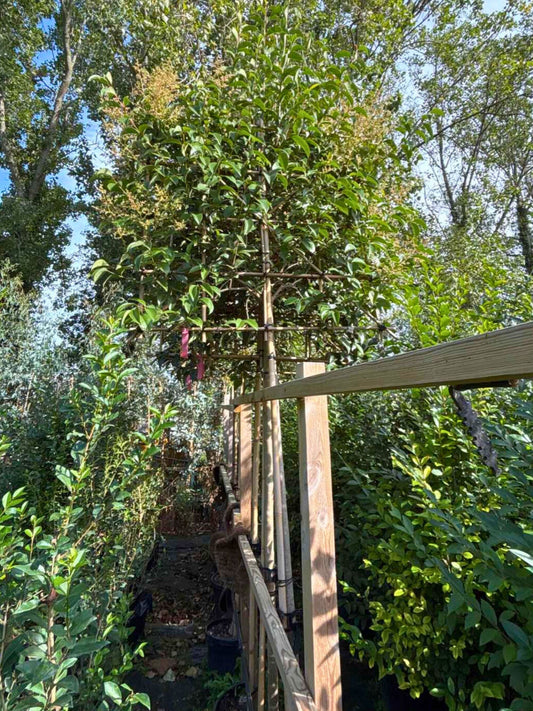
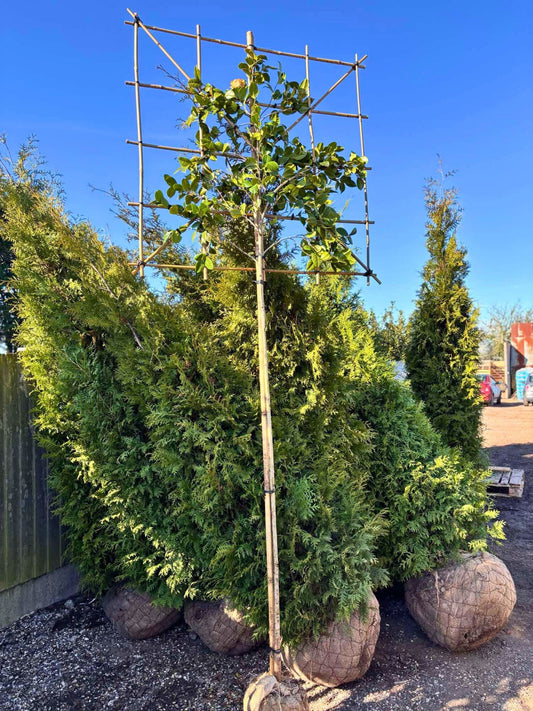
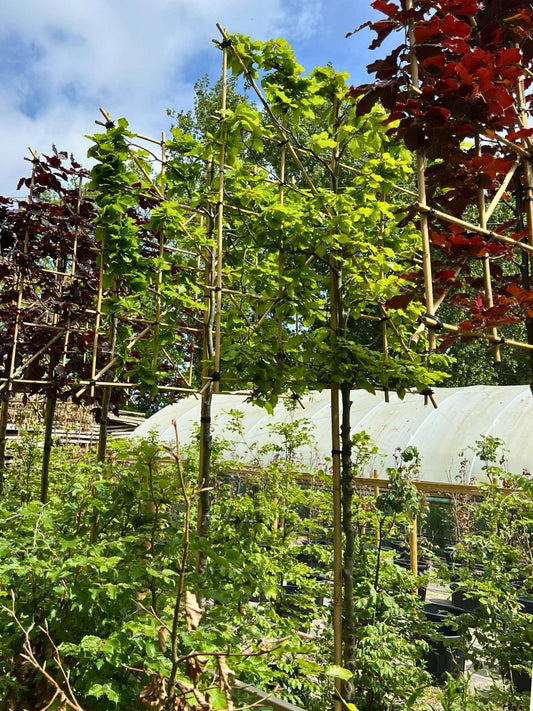
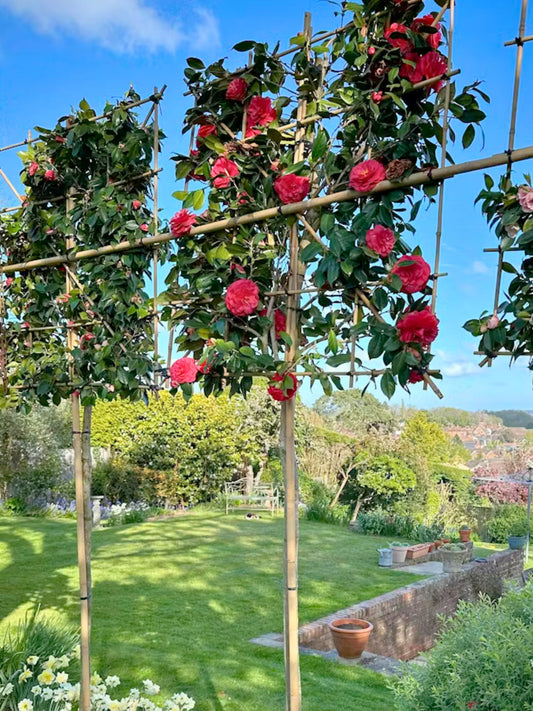
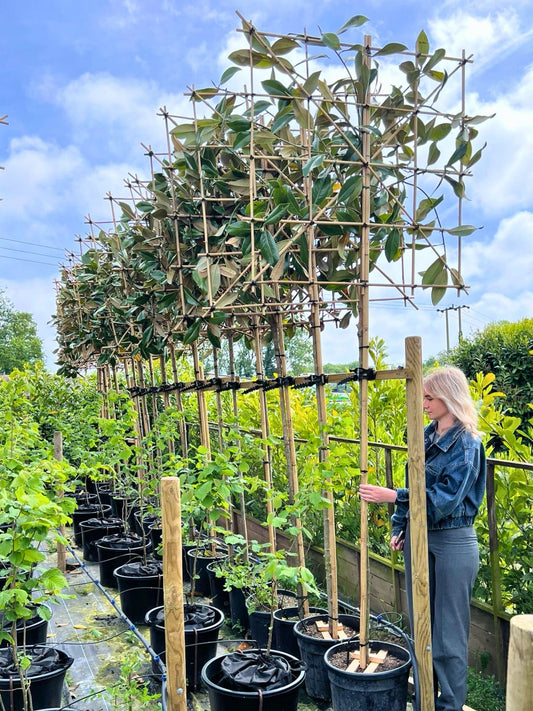
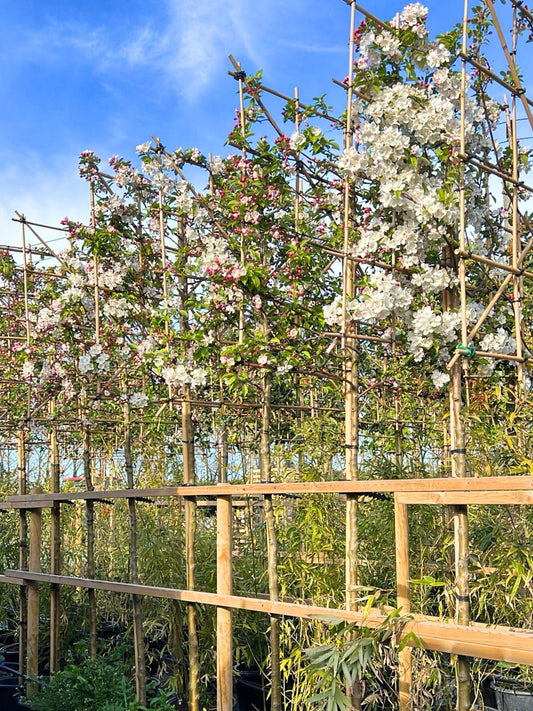
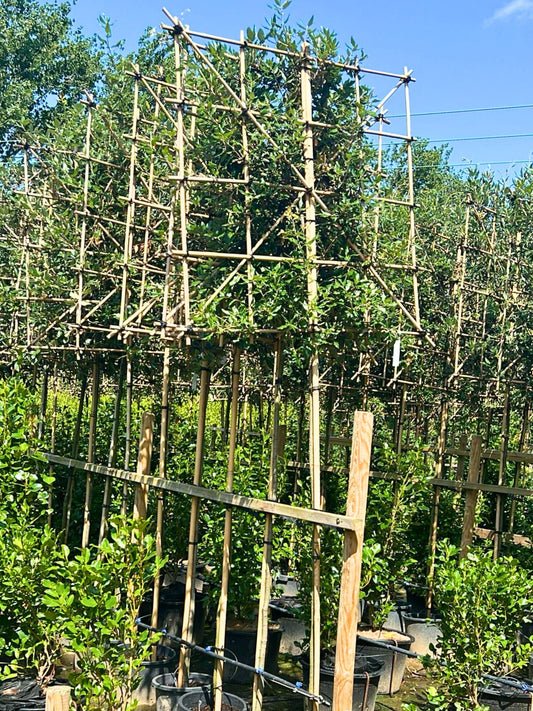
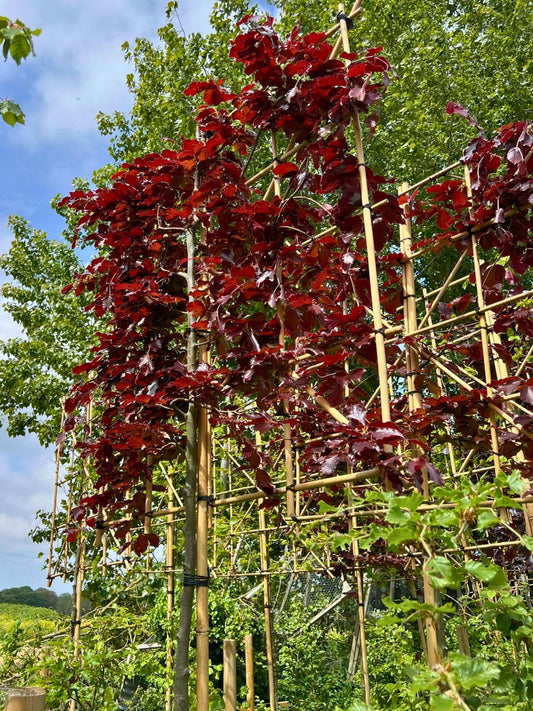
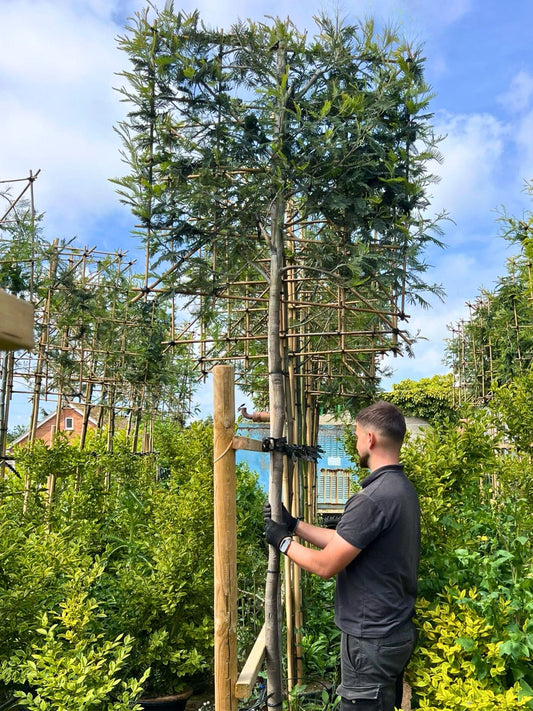
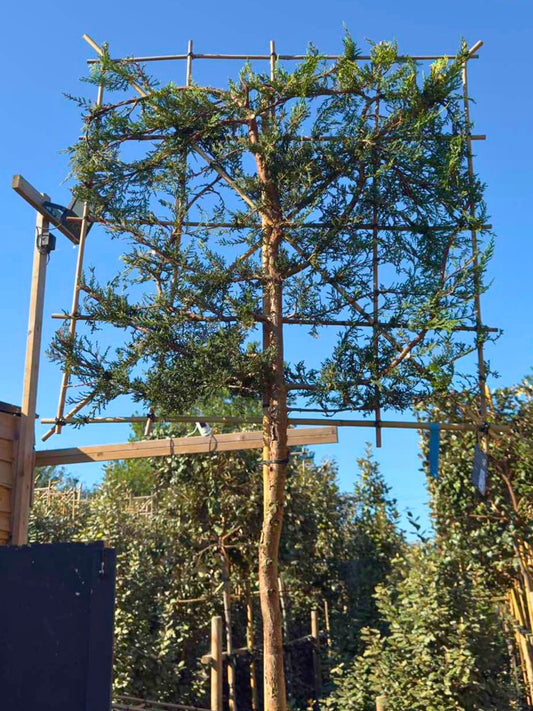
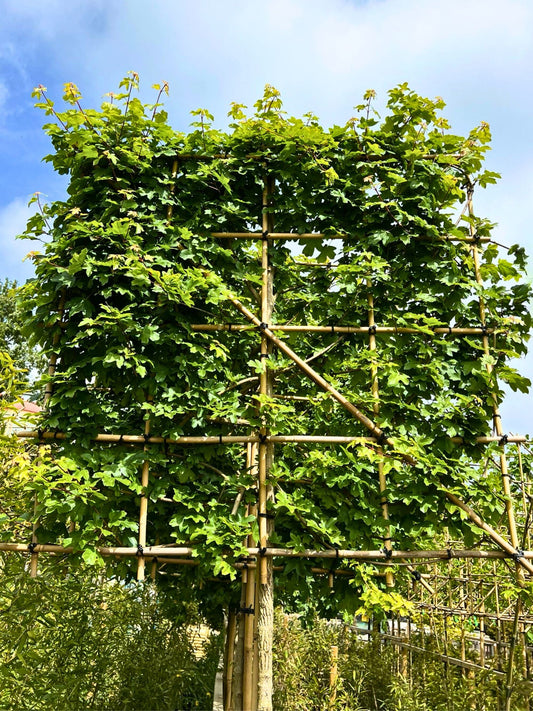
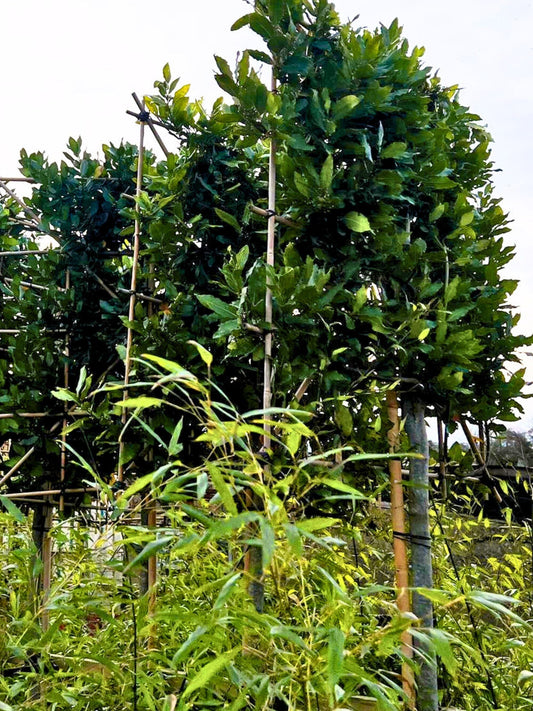
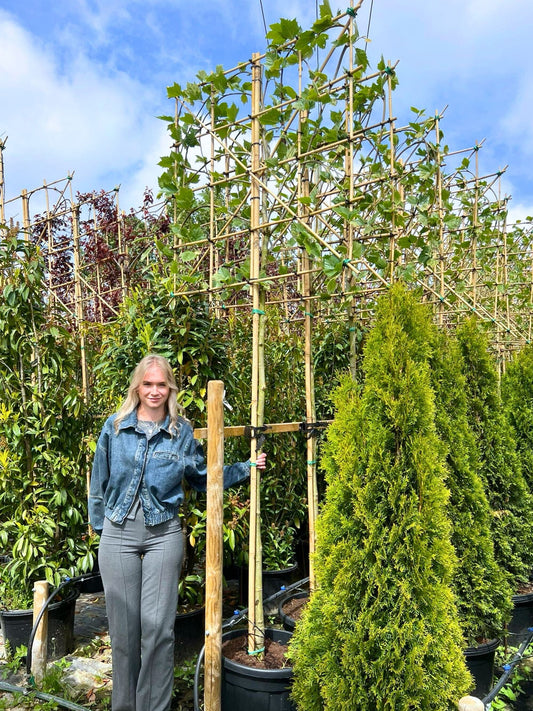
After a season of growth, check the ties holding branches to the pleach frame, including those along the central bamboo cane. Carefully remove any that are digging into the bark and replace them with soft, flexible ties where support is still needed. Leave enough room for the branches to thicken.
Replace loose or broken bamboo canes where you can reach them safely, securing the frame joints with suitable cable ties. Keep these separate from the soft ties used around living branches, and avoid cutting through several frame ties at once, which could leave the structure unsupported.
Adjust watering to the weather
Cooler days usually mean less watering, but continue checking soil moisture while your trees establish, particularly during their first two years after planting. Dry autumn spells can still leave the rootball short of water, even when the surface looks damp. Newly planted evergreen trees need attention too, as they continue to lose moisture through their leaves.
When the soil around the roots begins to dry, water slowly and thoroughly. Reduce or pause irrigation during wet weather and avoid watering soil that is already saturated. Aim for moist but free-draining soil, never waterlogged.
Check drainage after heavy rain
After prolonged rainfall, look for standing water around your trees and clear fallen leaves or debris from nearby drainage channels where it is safe to do so. Waterlogged soil contains too little air for roots to function well, so adding more water can make matters worse.
Avoid walking on or digging into saturated soil, as this can damage its structure and make drainage worse. Allow excess water to drain before working around the trees. If water repeatedly collects or remains around the roots, ask a garden professional to assess the drainage rather than simply loosening the surface.
Assess damage after storms
Once the weather has settled, check your trees from ground level for split branches, damaged trunks and movement around the roots. Keep clear of hanging branches or unstable trees, and arrange professional help for anything that cannot be assessed or reached safely.
If the main trunk has snapped or split, act promptly and ask a qualified tree surgeon to assess the damage. Keep clear of unstable stems or hanging branches, and seek advice before attempting a temporary repair, such as binding the trunk with tape or ties or applying grafting wax. These measures are not a reliable long-term solution and will not make a damaged trunk safe. Whether the tree can be retained will depend on the position and extent of the damage, and replacement may be necessary.
If you have been badly affected by storm damage
You are not alone. We will help guide you to save your trees, but if replacement becomes necessary, we are here to support you. As a gesture of goodwill, we may be able to offer a discount on replacement trees previously purchased from us that were lost to adverse weather, at the manager’s discretion, and delivery fees may apply. If you reorder, we will ensure any new trees match the bamboo frame style of your existing ones, keeping your garden looking its best.
Plan pruning for the right season
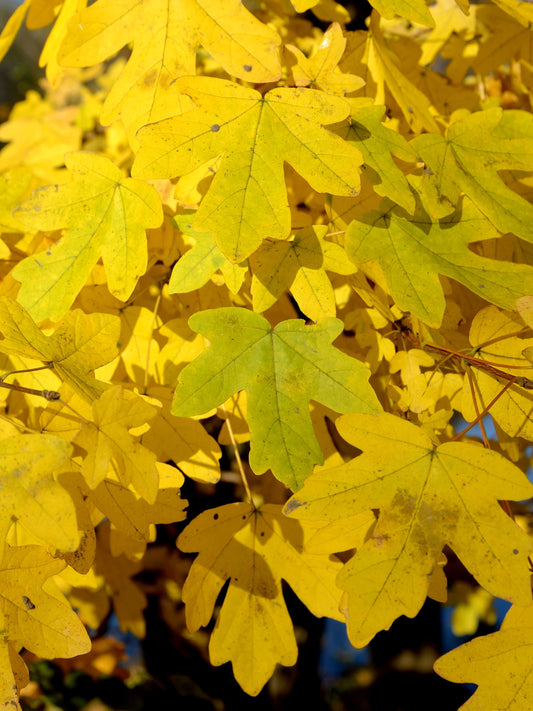
As deciduous trees lose their leaves, it becomes easier to see their branch structure. Note any crossing, damaged or unwanted growth, but avoid giving every tree an autumn trim simply to prepare it for winter. The right pruning time depends on the species and the work needed.
Check the pruning advice for your tree before cutting back. Many deciduous trees can be pruned while dormant, while others need summer pruning. Storm damage may need attention sooner, so seek professional advice for larger breaks or splits rather than waiting for the usual pruning season.
Weed and top up the mulch
Keep the area around your trees clear of weeds and grass, which compete with developing roots for water and nutrients. Autumn is a good time to top up the mulch with well-rotted garden compost or composted bark, while the soil is moist but not waterlogged or frozen.
Aim for a total mulch depth of around 5–7.5cm, allowing for any material already there, and leave a clear gap around the trunk. Mulch helps retain moisture, suppress weeds and protect the roots from changes in temperature through the colder months.
Care for your trees throughout the year
A little care each season will help your pleached trees settle in, grow well and keep their shape. Our full care guide brings together practical advice to help you look after them throughout the year.