
Caring for Your Trees in Autumn: Checking Stakes, Recovering After Storms & Heavy Rain
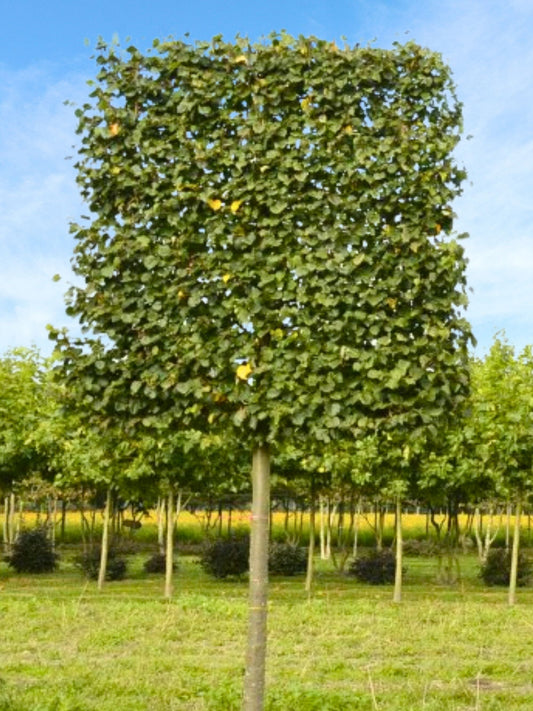
Autumn is a season of change in the garden. Growth slows, leaves begin to fall, and the weather becomes less predictable. While your pleached trees are starting to wind down for winter, a few sensible checks now can make a real difference to how well they cope with storms and how strongly they return in spring.
Checking ties and supports
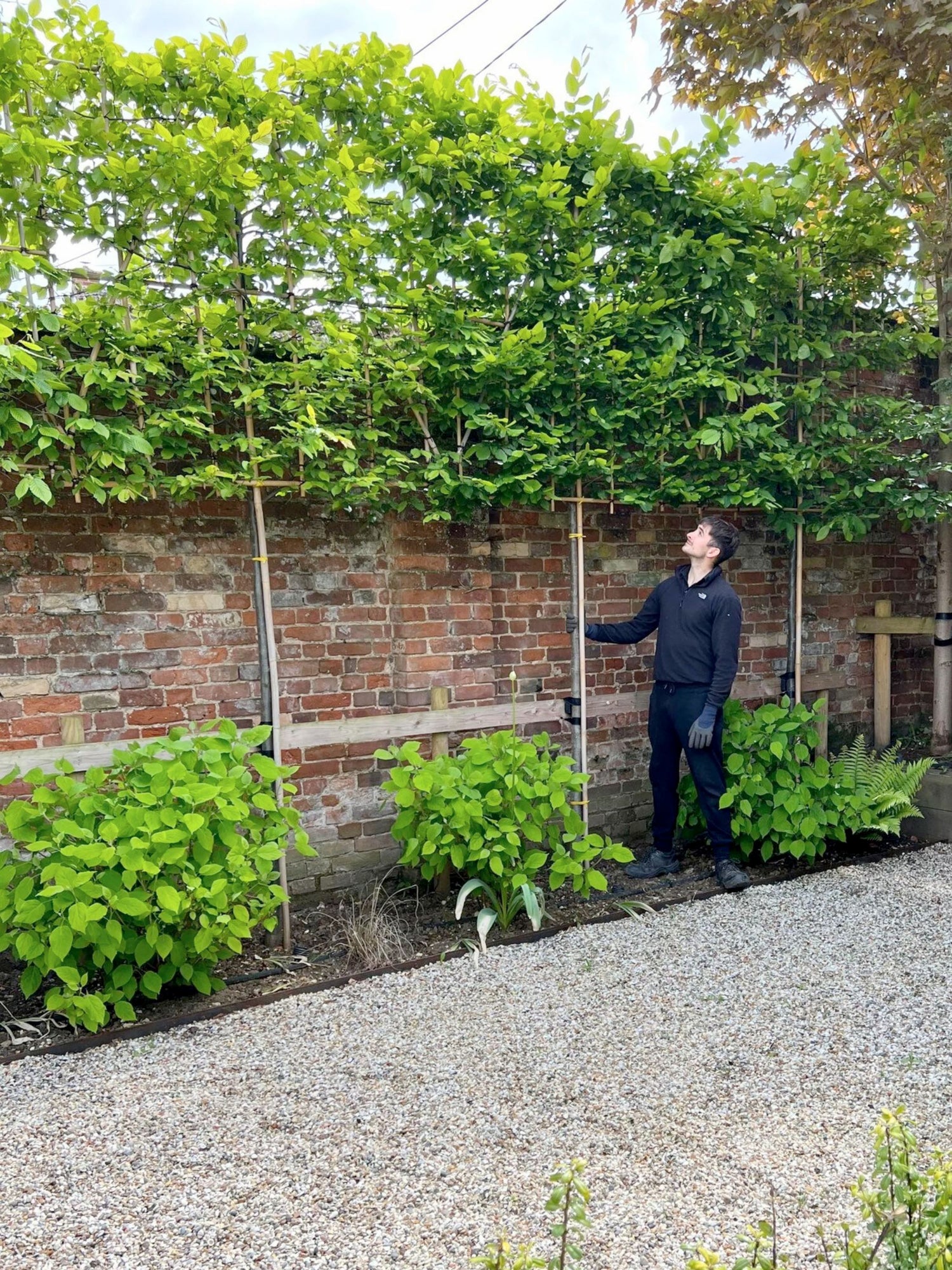
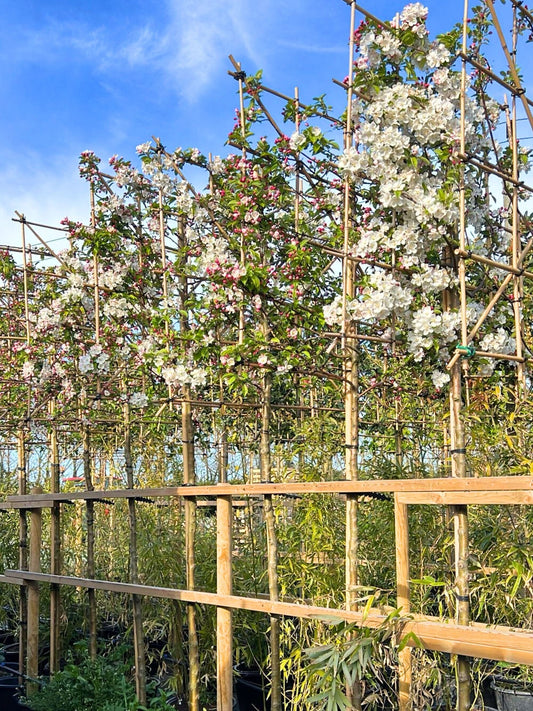
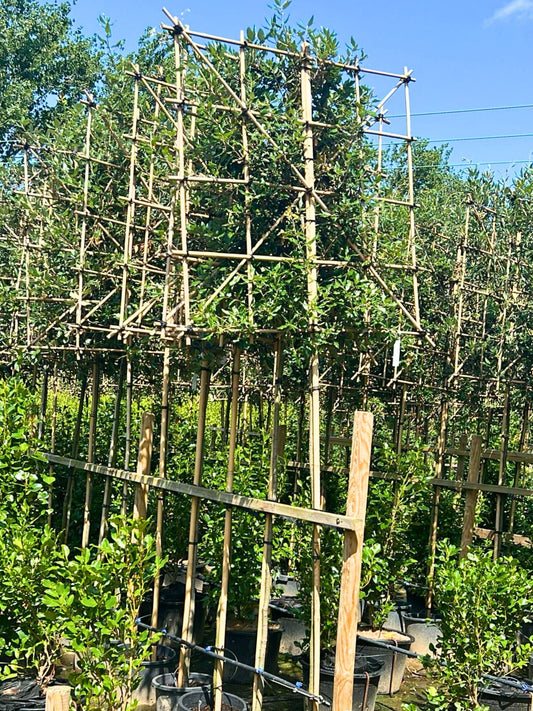
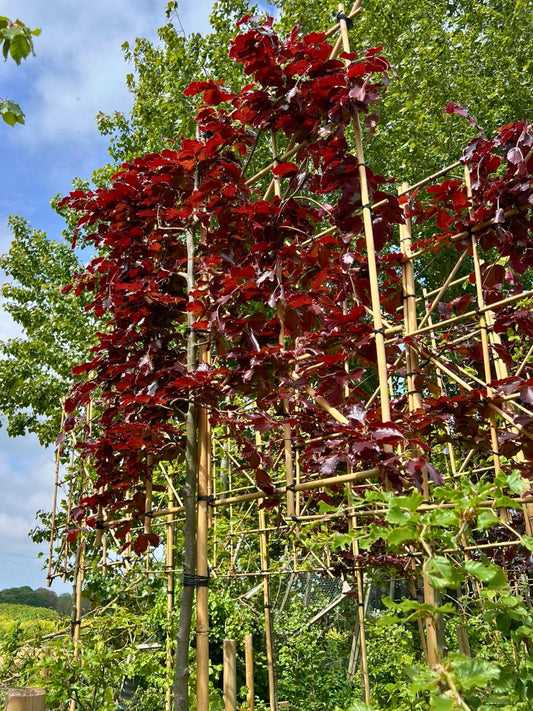
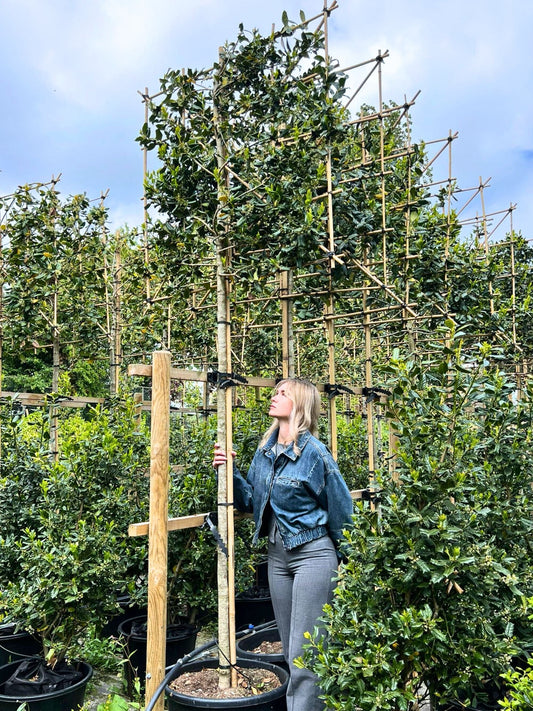
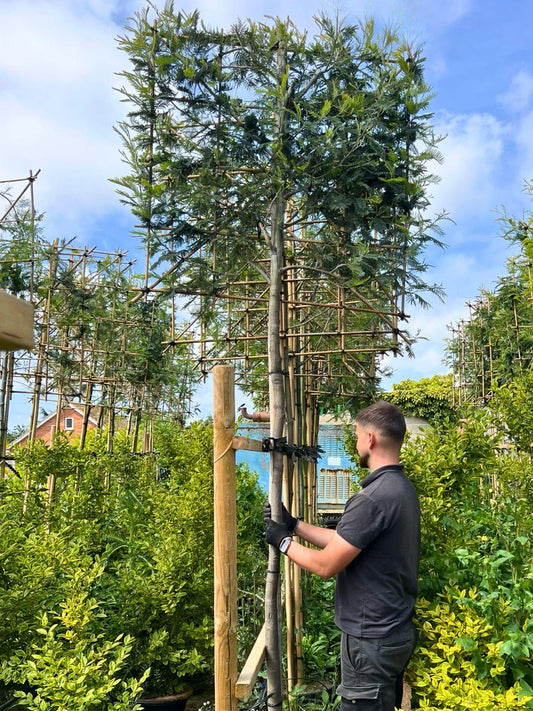
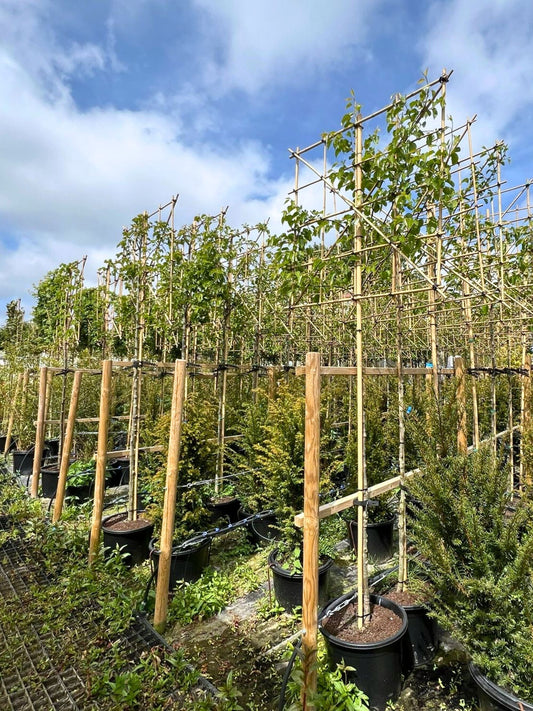
As wind and rain pick up, check that stakes, frames, and ties remain secure. Make sure ties are not rubbing or digging into the bark and that stakes are firm in the ground. Trees should be supported but not rigid, allowing a little natural movement which helps build strength.
Managing heavy rain and drainage
Prolonged rainfall can lead to waterlogged soil, which puts stress on roots. If water is pooling around the base of your trees, clear away debris and lightly loosen compacted soil where possible to encourage drainage. Avoid additional watering during wet spells, even if the tree was planted recently.
Light pruning and tidying
Autumn is a good time to remove any damaged, crossing, or clearly unwanted growth caused by summer winds or storms. Keep pruning light and focused on tidying rather than reshaping. This helps reduce wind resistance and lowers the risk of damage during winter gales.
Preparing for winter
As temperatures drop, autumn is your chance to get everything winter-ready. Top up mulch around the base of your trees to help regulate soil temperature and protect roots. A little preparation now helps your pleached trees rest safely through winter and bounce back when spring arrives.
Recovering from storm damage
Storms can wreak havoc on gardens, and for tree lovers, seeing damage to carefully tended pleached trees can be upsetting. If your trees stood firm or suffered damage, the steps below will help you assess and care for them after severe weather.
Snapped clear stems
- Act quickly: Align the broken stem as best as possible.
- Secure the break: Use tree grafting wax to seal the wound and grafting tape to hold it in place. For extra strength, encase the repair with strong ties available online or at garden centres.
- Be realistic: Recovery is not guaranteed. Look for signs of new growth in spring as a positive sign.
Snapped bamboo canes or frames
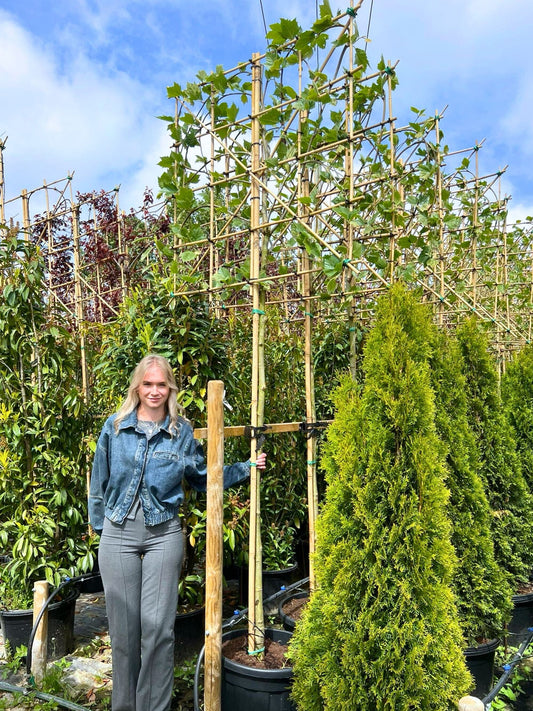
- Replace and secure: Bamboo canes are readily available at most garden centres and are easy to replace. Use small black zip ties to secure them, which is the method we use at the nursery.
Loose or uprooted trees or stakes
- Reposition the tree: Straighten the tree and firm the soil around its roots to secure it.
- Re-anchor stakes: Drive stakes firmly back into the ground and secure the ties snugly but not too tight, allowing for natural movement.
Flooded or waterlogged roots
- Allow the water to drain: Adjust your watering schedule or irrigation settings and avoid adding more water while the soil is saturated.
- Encourage drainage: Check for compacted soil around the base and loosen it if possible to help improve drainage.
If you have been badly affected
You are not alone. We will do everything we can to help you save your trees, but if replacement becomes necessary, we are here to support you. As a gesture of goodwill, we may be able to offer a discount on replacement trees previously purchased from us that were lost to adverse weather, at the manager’s discretion, and delivery fees may apply. If you reorder, we will ensure any new trees match the bamboo frame style of your existing ones, keeping your garden looking its best.









![Ultra-Mature Small-Leaved Lime Pleached Tree [Tilia cordata 'Greenspire'] | Mature Pleached Trees](http://justpleachy.co.uk/cdn/shop/files/ultra-mature-small-leaved-lime-pleached-tree-tilia-cordata-greenspire-mature-pleached-trees-pleached-tree-deciduous-small-leaved-lime-pleachy-trees-248905.jpg?v=1746369655&width=533)