
Caring for Your Trees in Spring: Watering, Checking Ties & New Growth
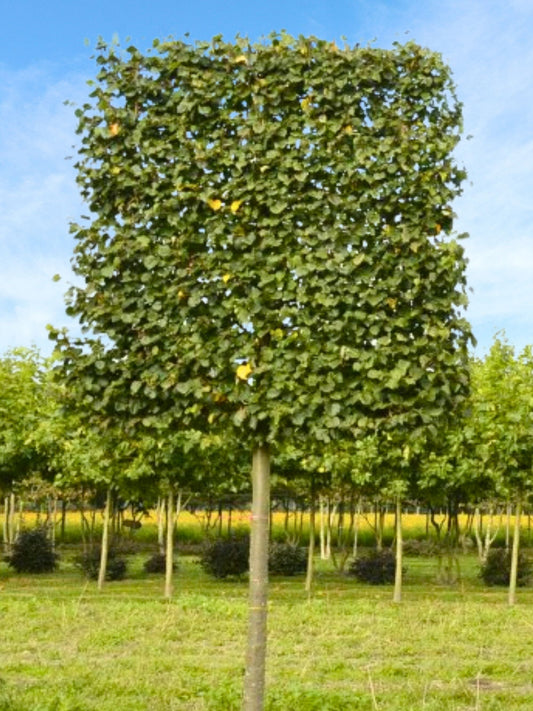
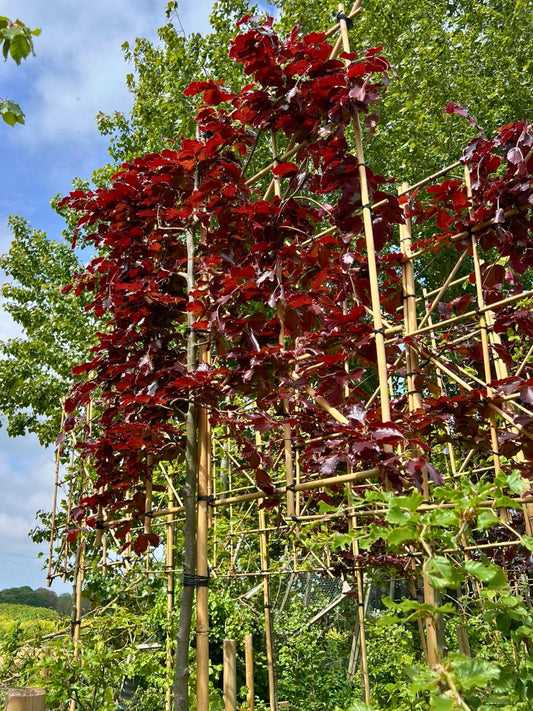
As the days grow longer and the soil begins to warm, your pleached trees will start to put on fresh growth. A little attention now will help them through the season ahead. Check their watering needs, make sure ties and supports are in good order, and guide new shoots as they develop.
Water as your trees come into growth
Check soil moisture regularly while your trees establish, particularly during their first two years after planting. Some trees may need watering for longer. Check beneath the surface, as rain does not always reach the roots where it is needed.
When the soil around the roots begins to dry, water slowly and thoroughly so that water reaches the full depth of the rootball. Adjust your watering to suit the weather and soil conditions, checking more often during dry or windy spells. Aim for moist but free-draining soil, never waterlogged.
Check and loosen training ties
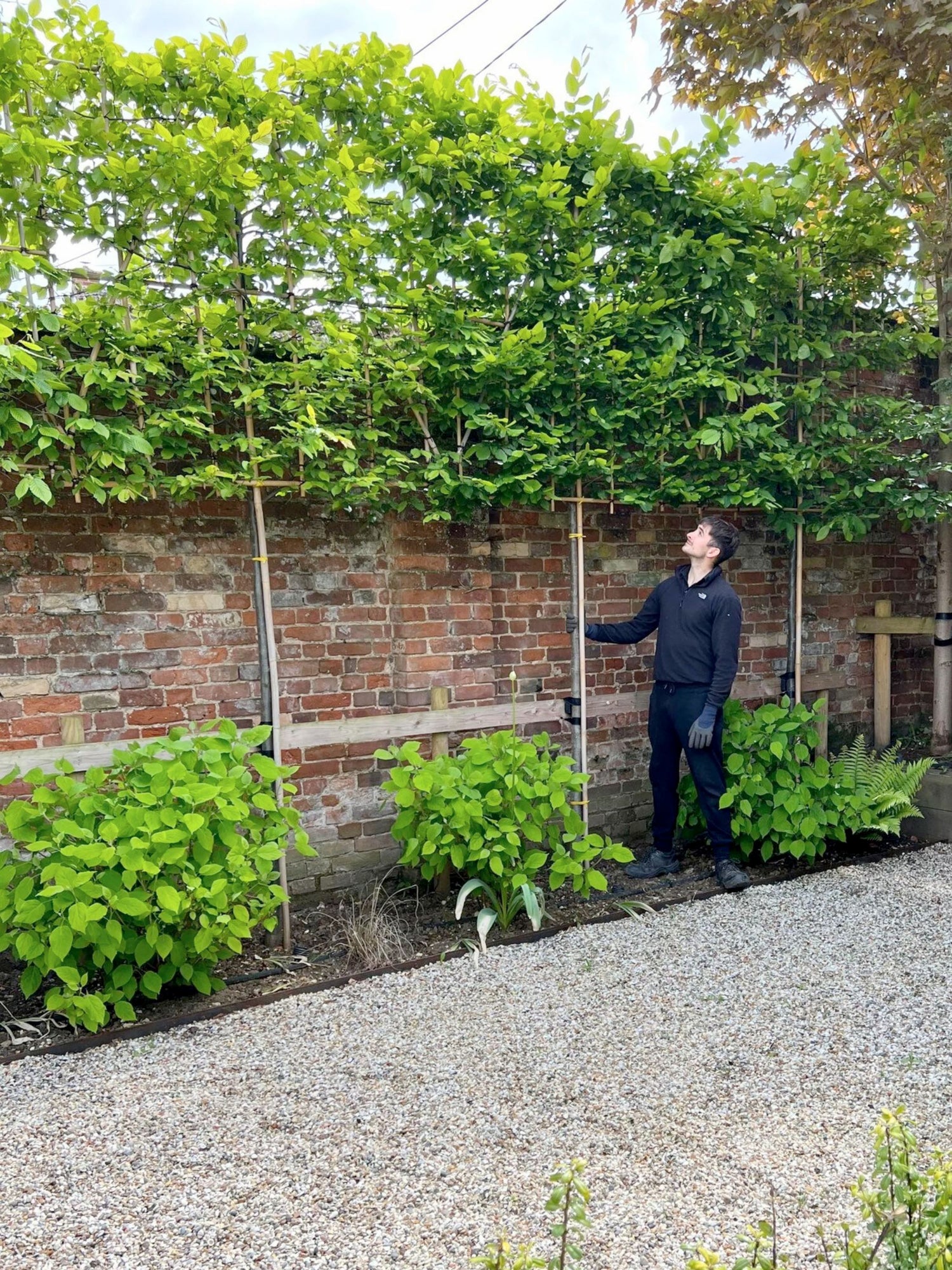
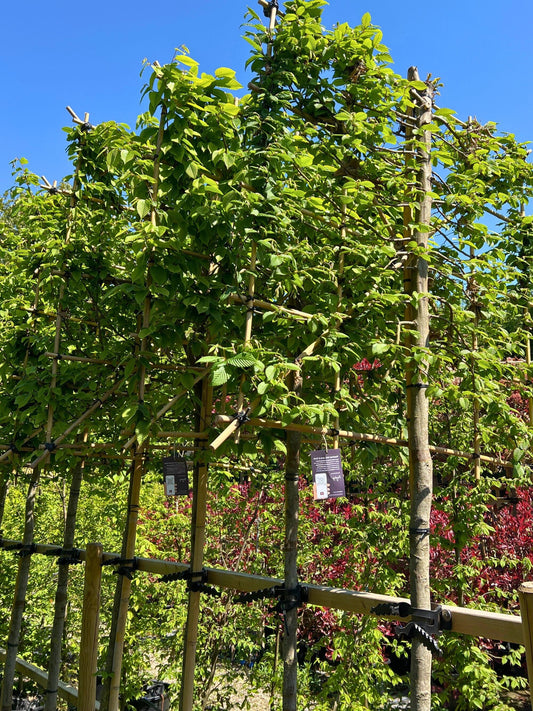
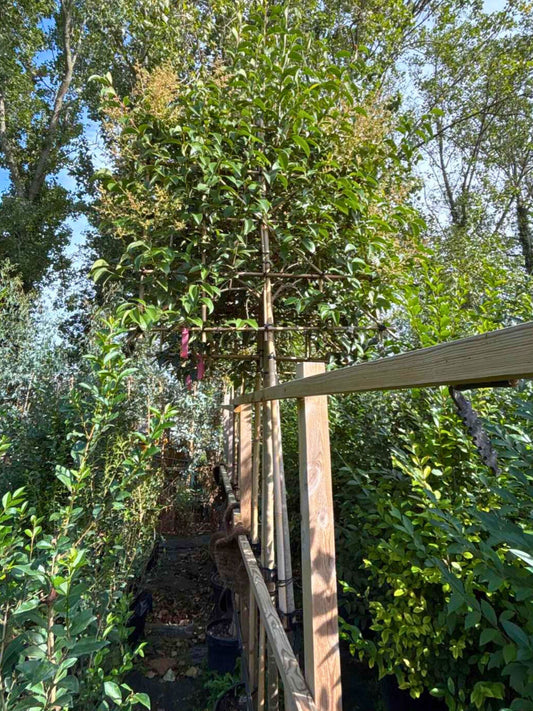
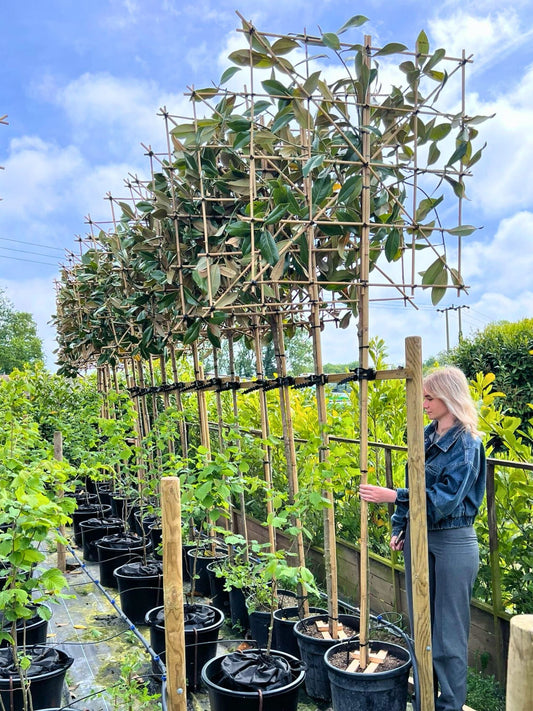
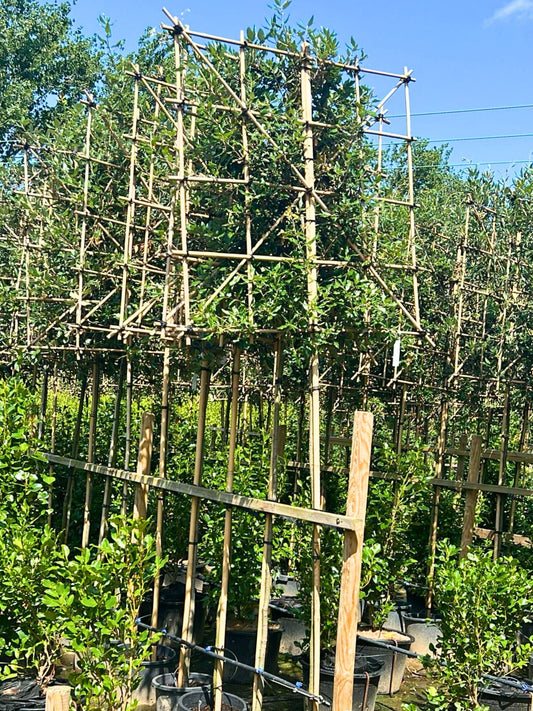
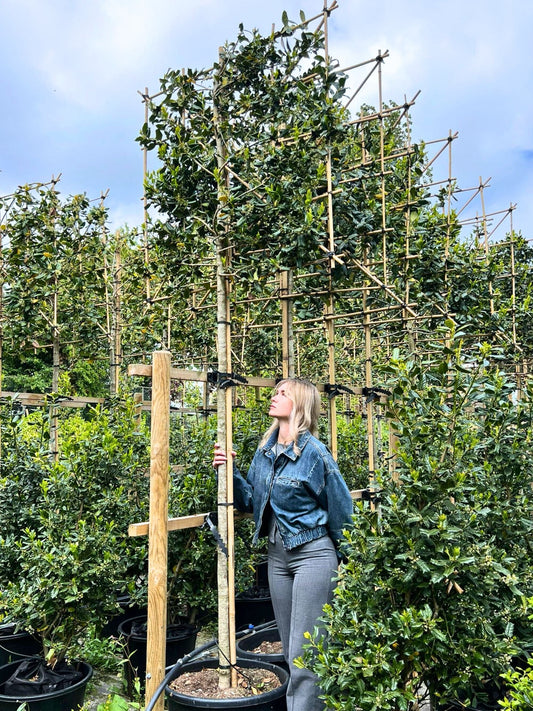
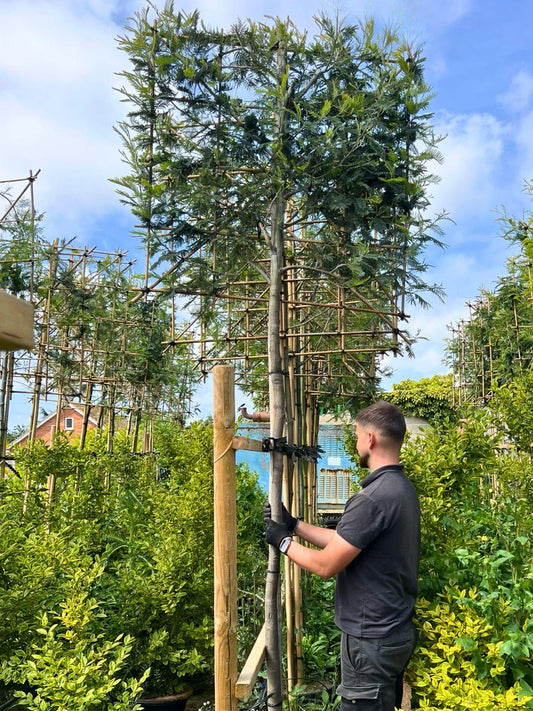
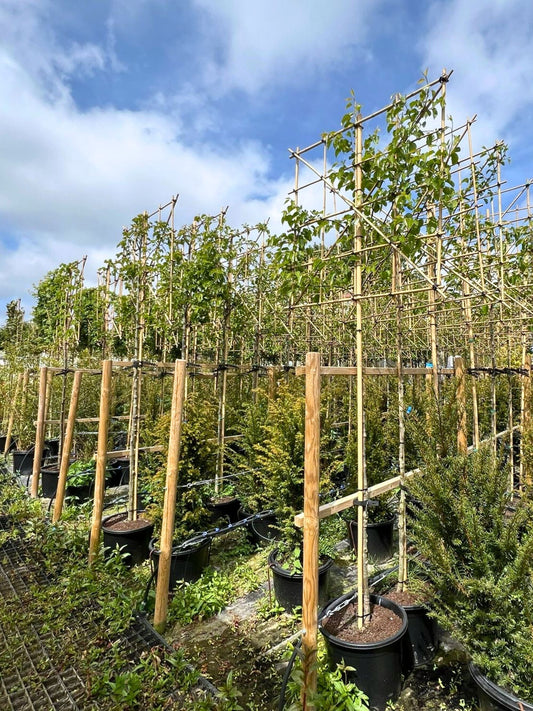
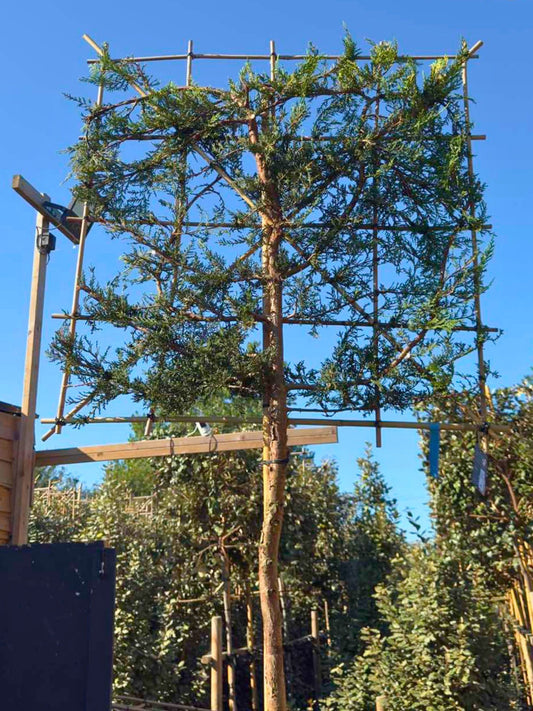
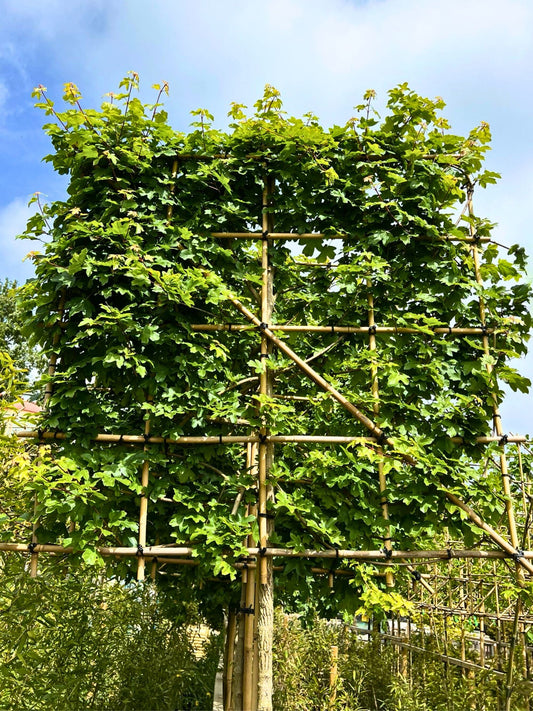
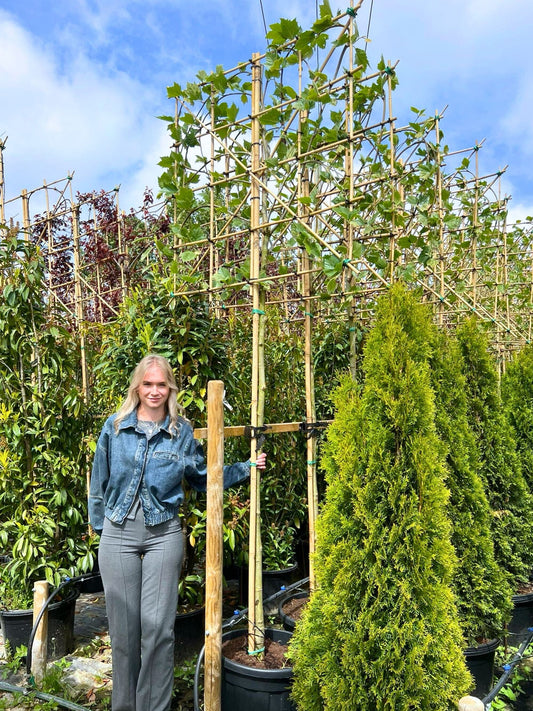
As branches thicken, the ties holding them to the pleach frame can become tight. Check each one, including those along the central bamboo cane, and carefully snip away any that are digging into the bark or trapping new growth. Leave the ties that hold the bamboo frame together in place unless they need replacing.
Where a branch still needs support, secure it with a soft, flexible tie that leaves room for growth. Avoid tying metal wire directly around branches, as it can damage the bark. Some established branches will hold their position without a tie, while younger branches may need support for several growing seasons. Continue checking ties as your trees grow.
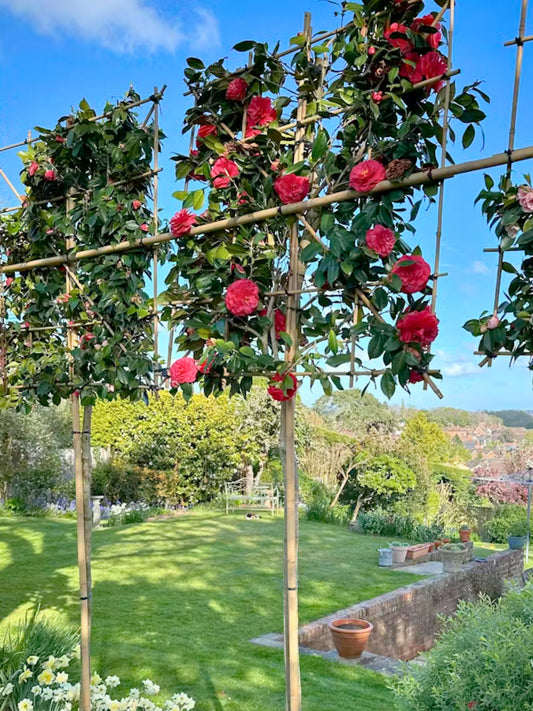
Guide new shoots along the frame
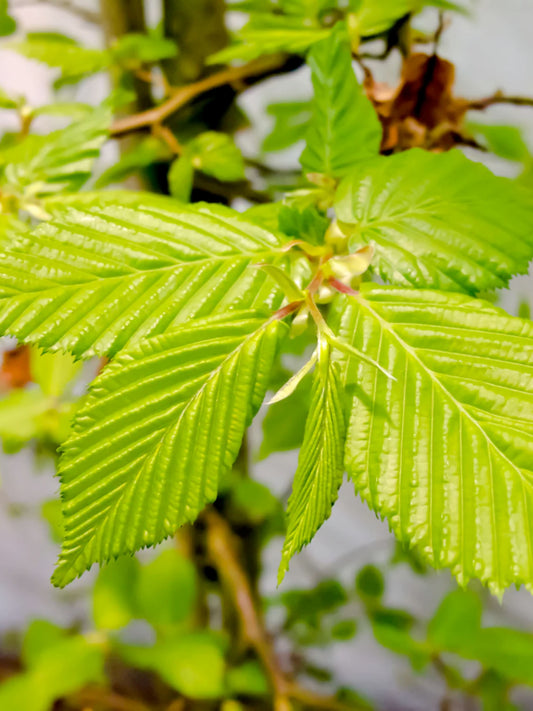
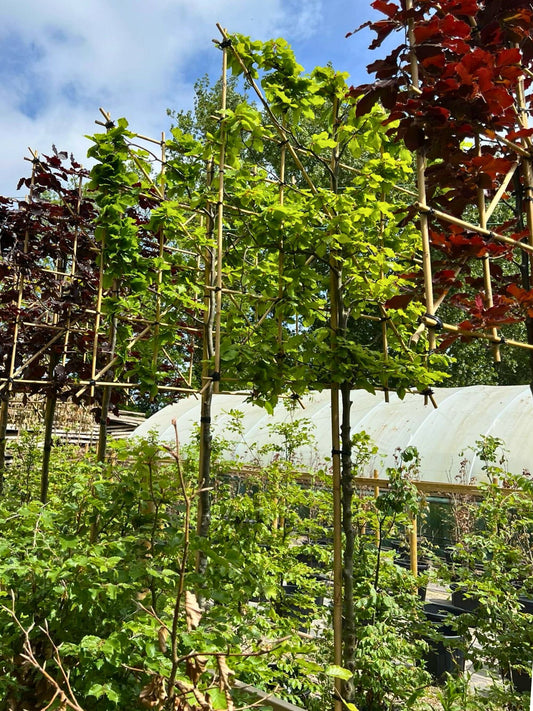
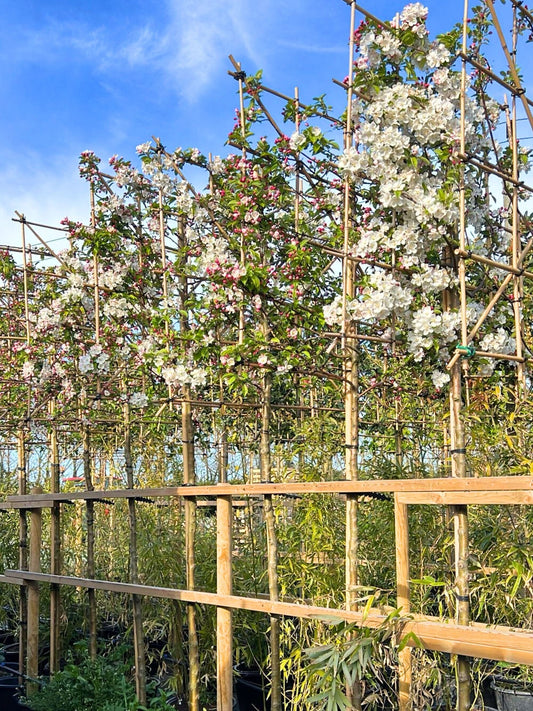
As new shoots become long enough to reach the frame, gently guide them into position while they are still flexible and secure them loosely where needed. This helps fill gaps and encourages an even screen. There is no need to force short or stiff shoots into place; training can continue through summer as growth develops.
Before working among the branches, check for nesting birds and leave occupied nests and the surrounding growth undisturbed. If a shoot cannot be trained and needs cutting back, check the pruning advice for your tree first, as the right timing varies between species.
Check stakes and tree ties
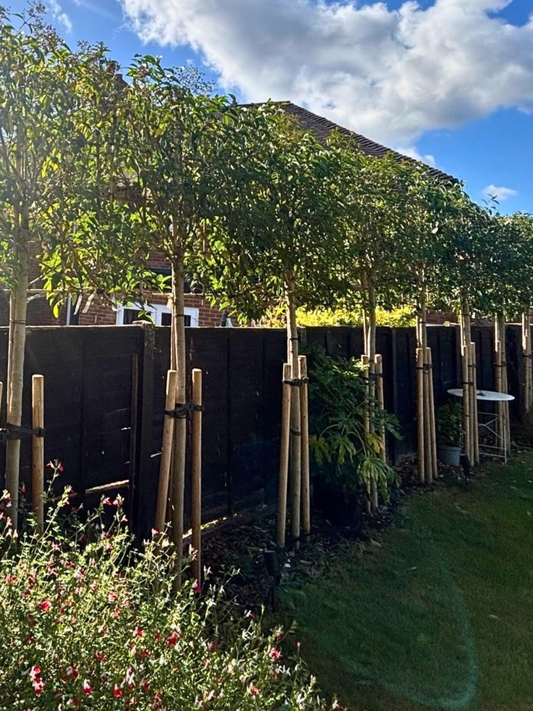
Check that stakes remain firm after winter and that the tree ties supporting the trunk are secure and in good condition. Adjust any that have become tight or are rubbing against the bark, and replace damaged ties. The supports should keep the roots stable while allowing the trunk a little movement.
If the soil has loosened slightly around the base, gently firm it back down and check that the stakes are secure. If a tree has developed a significant lean or its rootball has lifted, contact a garden professional before trying to reposition it. Check the pleach frame for loose or broken canes too, so that it is ready to support the season’s growth.
Feed if needed
Trees growing well in healthy garden soil do not usually need routine feeding. If growth has been poor, check watering, drainage and competition from weeds before reaching for fertiliser. Where additional nutrients are needed, spring is a suitable time to apply a fertiliser intended for trees and shrubs. Follow the product instructions for the amount and timing, and avoid overfeeding.
Check leaves and shoots for pests
Take a few moments to look over fresh growth, including the undersides of leaves. Curled foliage, sticky deposits or chewed leaves can be signs of pests, but a few insects or nibbled leaves rarely call for treatment. Identify the cause before taking action and keep an eye on any damage. Birds and beneficial insects, such as ladybirds, can help keep aphids in check.
Weed and top up the mulch
Keep the area around your trees clear of weeds and grass, which compete with developing roots for water and nutrients. In mid to late spring, top up the mulch with well-rotted garden compost or composted bark while the soil is moist and not frozen.
Aim for a total mulch depth of around 5–7.5cm, allowing for any material already there. Spread it over the surrounding rooting area and leave a clear gap around the trunk. This helps retain moisture, suppress weeds and protect the soil from changes in temperature without holding damp material against the bark.
Care for your trees throughout the year
A little care each season will help your pleached trees settle in, grow well and keep their shape. Our full care guide brings together practical advice to help you look after them throughout the year.









![Ultra-Mature Small-Leaved Lime Pleached Tree [Tilia cordata 'Greenspire'] | Mature Pleached Trees](http://justpleachy.co.uk/cdn/shop/files/ultra-mature-small-leaved-lime-pleached-tree-tilia-cordata-greenspire-mature-pleached-trees-pleached-tree-deciduous-small-leaved-lime-pleachy-trees-248905.jpg?v=1746369655&width=533)