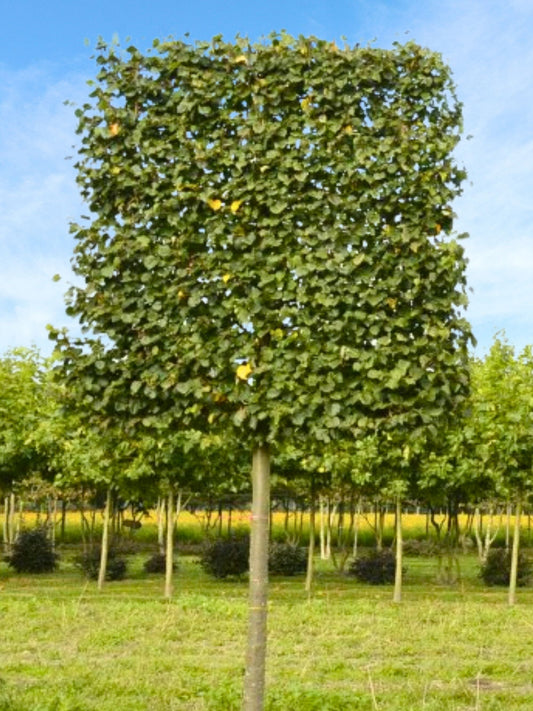

Caring for Your Trees in Summer: Watering, Responding to Hosepipe Bans & Heat Stress
Summer brings warmth, longer days, and continued growth, but it can also put extra strain on newly planted trees. Hot spells and dry soil mean your pleached trees may need a little more attention to stay healthy and settled. And nothing says a hot summer more than the Great British Hosepipe Ban. So, with reservoirs low, temperatures high, and lawns turning beige, we'll answer the most common questions below.
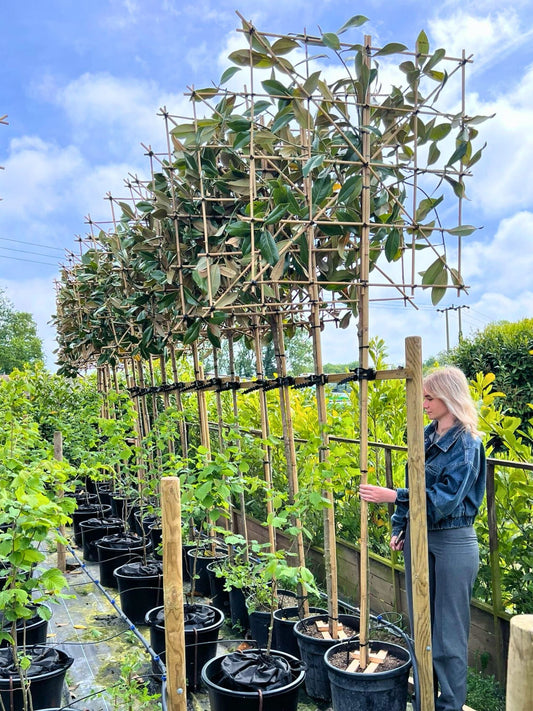
I have trees on order. Can my trees stay at the nursery with you, soaking up the good life?
Yes! They’re enjoying a mini break at the nursery with full irrigation and zero stress.
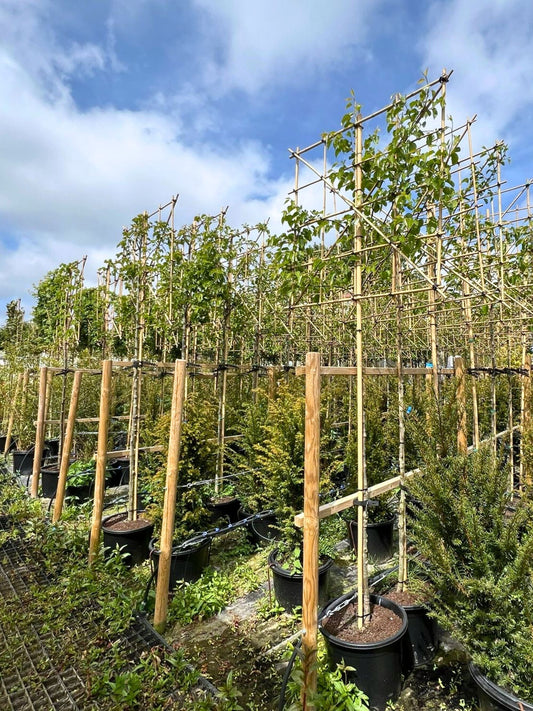
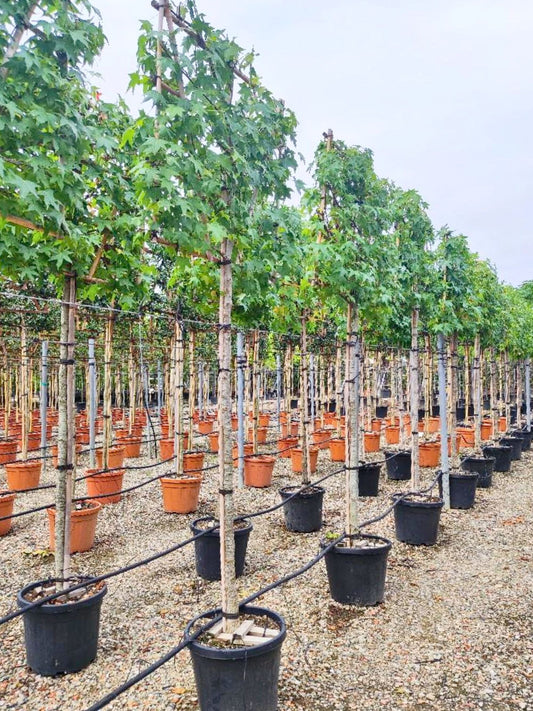
If you’ve already placed an order (or are thinking about it), we’re happy to hold your trees until the heatwave passes. They’ll stay safe and well-watered under our drip irrigation system, proudly labelled with a “sold” tag, until things cool down, with delivery likely towards the end of August or early September.
What if I’ve already planted them and now feel like a tree parent in a heatwave?
Welcome to plant parenthood. It’s hot, you’re stressed, and someone needs a drink.
And your trees do need watering. There’s no getting around it. But it has to be done within the rules set by your local water company. Hosepipe bans, officially known as Temporary Use Bans, are there to reduce non-essential water use. The good news is that many water suppliers list exemptions for newly planted trees, especially those planted within the last three years. If you are unsure what applies in your area, check directly with your water provider. Policies vary slightly, and updates can appear faster than a garden dries out in 28°C.
What about the rest of my garden, is it about to turn into a botanical oven tray?
Not on our watch. Let’s try to avoid a total crisp-fest...
If your provider doesn’t allow tree watering by hosepipe, or if you want to give your borders some love too, here are three smart ways to water your garden during a hosepipe ban:
-
Use rainwater from a water butt with a watering can
Rainwater is not restricted. It is better for your plants and costs nothing. The RHS notes that rainwater is softer, has a lower pH, and contains fewer minerals than tap water, making it ideal for most garden plants. Store it in a clean, shaded butt with a lid to avoid smells, algae, and mosquito larvae. If you do not already have a water butt, now is a good time to get one.
RHS Guide: Water: collecting, storing and re-using
-
Reuse grey water
Grey water from baths, showers and sinks can be reused, as long as it does not contain bleach or harsh chemicals. It is safe for ornamental trees and borders, but avoid using it on edible crops. Grey water should be used immediately and not stored, as it can quickly become unhygienic or develop unpleasant odours.
RHS Guide: Re-using grey water
-
Set up a drip irrigation system
Drip irrigation systems may be allowed during hosepipe bans if fitted with a timer and a pressure-reducing valve. These systems slowly deliver water straight to the roots, which reduces waste and improves absorption. Check with your water provider.
Why can’t my trees just tough it out like the rest of us?
They’re not being dramatic. They’re genuinely parched, and no, they can’t help themselves.
Newly planted trees haven’t developed deep roots yet. They rely on surface moisture, which evaporates fast. Trees are most at risk in their first two years. Even more drought-tolerant species need a hand while they establish.
Ok, ok, so how much water do they really need?
You are aiming for moist, free-draining soil. Your trees do not need gallons of water every day, but they do need regular care. A deep soak with a watering can two or three times a week is enough to make sure they root properly and stay healthy. Apply mulch around the base to help retain moisture and keep the roots cool.
Keep calm and carry a watering can
Got questions? Want us to hold your trees? Drop us a line. We’re here to help your trees thrive, whatever the weather.









![Ultra-Mature Small-Leaved Lime Pleached Tree [Tilia cordata 'Greenspire'] | Mature Pleached Trees](http://justpleachy.co.uk/cdn/shop/files/ultra-mature-small-leaved-lime-pleached-tree-tilia-cordata-greenspire-mature-pleached-trees-pleached-tree-deciduous-small-leaved-lime-pleachy-trees-248905.jpg?v=1746369655&width=533)